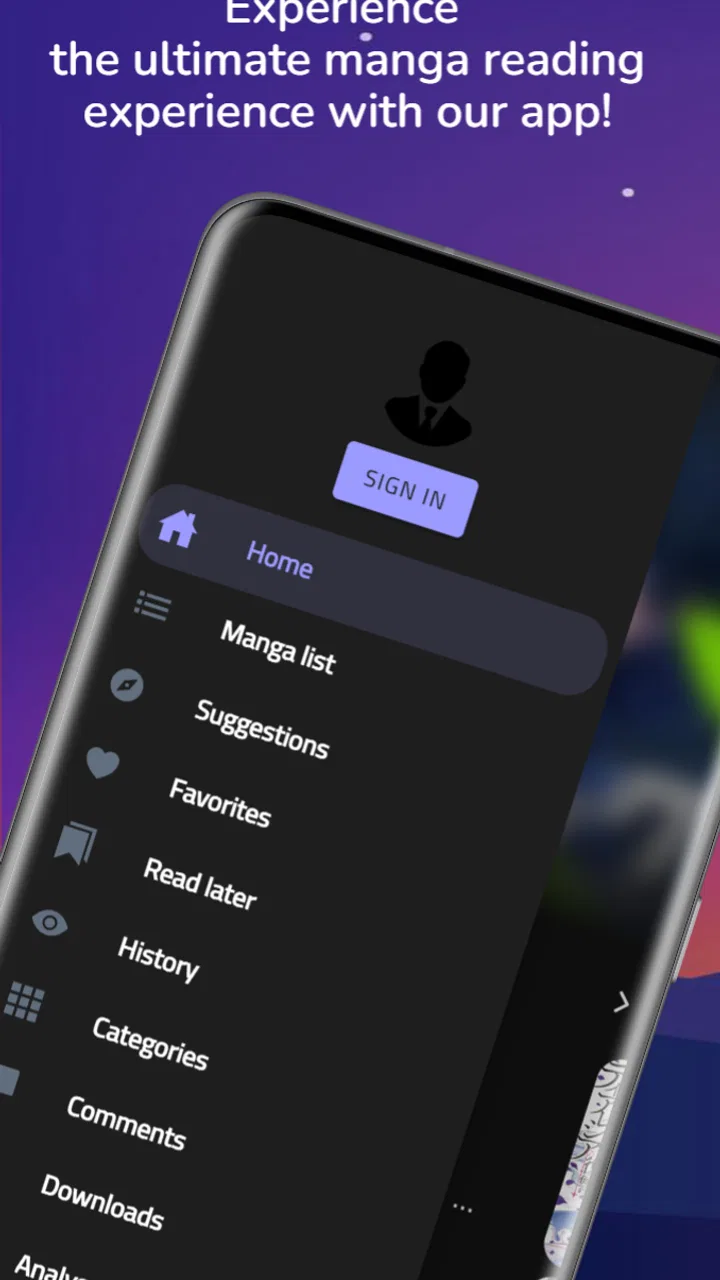
Manga Library - مكتبة المانجا
- 4.1
- Rating
- 500.00K
- Installs
- Free
- Price

 Analysis by App-foxy
I approached Manga Library - مكتبة المانجا as a reading tool rather than just another comics app. Its purpose is straightforward: help me find and read manga chapters in real time, while giving the reading experience more attention than a basic web page. That focus makes it appealing for anyone who wants a dedicated manga library on a phone, especially readers who dislike jumping between browser tabs, scattered sources, and awkward mobile layouts.
After spending time with it, my impression is positive but measured. The app is free, aimed at Everyone, and belongs to the Comics category. It was developed by SOUSSI NIAIMI Badr-Eddine and has built a sizeable audience, with more than half a million installs and an average rating of 4.2 from roughly 4.4 thousand ratings. Those figures suggest that it has found a practical place for many readers, although popularity alone does not guarantee that its reading flow will suit every person.
The most important question is not whether it contains manga at all. It is whether the experience makes reading comfortable when I am tired, using a smaller screen, dealing with glare, or trying to follow a chapter quickly during a short break. That is where the app’s strengths and limitations become clearer.
You May Also Like

 Blood Strike: 2.5 Anniversary
Blood Strike’s Loadouts Turn Every Drop Into a Tactical Gamble
A close look at Blood Strike’s custom loadouts: how fast access to signature weapons reshapes its battle royale rhythm, rewards preparation, and narrows the gap between fights.

 Pandora - Music & Podcasts
Pandora’s Music Is Easy to Start, but Harder to Recover
Pandora’s strength is its low-effort path from a seed to a station. Its weak spot is how much confidence it asks you to place in connection, setup, and quiet recovery.

 8 Ball Pool
 Is Built on Rivalries, Rematches, and Routine
A close look at the rivalries, rematches, shared routines, and unanswered safety questions that turn a quick pool match into a persistent mobile community.

 Samsung Music
’s Quiet Strength Is Playing What You Already Own
Its reach comes less from spectacle than from dependable access to a personal library. That simplicity is both the app’s strongest retention engine and its ceiling.

 AccuWeather: Weather Radar
AccuWeather Review: A Quick, Clear Forecast for Everyday Decisions
For everyday plans, the best forecast is the one you can understand quickly. AccuWeather makes rain timing, radar, and local conditions easy to act on, with a few trade-offs.

 Hill Climb Racing
Why Hill Climb Racing Still Turns Crashes Into One More Run
A tiny car, a bumpy hill and one more upgrade: Hill Climb Racing keeps resurfacing because its simple chaos makes every near-miss feel personal.
More From Our News Desk



Reading comfortably starts with navigation
The app’s central idea is a manga library with access to chapters as they become available. In everyday use, that can be more convenient than relying on a general browser search. A browser gives me flexibility, but it also brings distractions, inconsistent page designs, and the risk of losing my place among several open tabs. A focused manga app gives the activity a clearer boundary: open the library, choose a title, and start reading.
I found that this kind of structure matters particularly for readers who prefer predictable routines. If I am following several series, a dedicated library is easier to return to than a collection of bookmarks mixed with unrelated pages. The store summary emphasizes real-time chapter reading and advanced features, so the app is clearly designed around keeping the reading process current rather than treating manga as a static collection.
That said, navigation quality is not only about how quickly I reach a chapter. A good reading app should also reduce the number of decisions I need to make. Readers with attention difficulties may benefit from a simple path from library to title to chapter, while readers who are easily overwhelmed may find a crowded catalog less comfortable if too many choices appear at once. I would use the library as the starting point and avoid treating every available title as something I need to organize immediately.
For people who read in short sessions, the practical advantage is easy to understand. Imagine waiting for an appointment with only a few minutes available. Opening a familiar manga library is less demanding than searching from scratch, checking several pages, and trying to remember which chapter was next. The app suits that stop-and-start pattern well, provided the reader has already narrowed down what they want to follow.
One useful habit is to keep a small personal routine around it: choose a series before the reading session, open the next chapter directly, and leave browsing for a longer break. This is not a feature claim; it is simply the best way I found to prevent the library from becoming a source of distraction. The app is strongest when I use it as a reading shelf, not as an endless discovery feed.
Page readability depends on the reader’s setup
Manga is visually demanding by nature. Panels, speech bubbles, sound effects, fine line work, and small translated text all compete for space on a phone display. Even when an app presents chapters effectively, comfort depends on the device, the reader’s eyesight, and the surrounding light. I would not judge readability only by whether a page opens quickly. The real test is whether I can follow a full chapter without repeatedly squinting, zooming, or losing the panel sequence.
A larger phone or tablet is naturally more comfortable for detailed pages than a compact handset. Readers with low vision may need to enlarge pages or change their viewing position, but that can create a trade-off: enlarging a panel may improve text clarity while forcing more panning and increasing the chance of missing the intended reading order. For that reason, I would test a few pages before committing to a long session.
Brightness also deserves attention. A bright screen can make light pages easier to see in a well-lit room, but it may cause discomfort at night. A dim screen can be gentler in bed, yet too little contrast may make gray tones and thin lettering harder to distinguish. The most accessible approach is personal adjustment rather than assuming one setting works for everyone. I recommend checking the first chapter in the exact conditions where you normally read.
Readers who use glasses, magnification, or other visual supports should pay special attention to whether enlarged pages remain manageable. If a chapter requires constant two-finger movement, the app may become tiring even if the artwork itself is clear. On the other hand, someone with good near vision and a medium or large display may find the reading flow perfectly adequate.
The strongest accessibility choice is the one that reduces effort before fatigue begins. In practice, that means choosing a comfortable screen position, avoiding harsh reflections, and stopping when the page becomes work rather than entertainment. Manga Library can support the reading task, but it cannot remove the physical limits of a small screen or compensate for every visual need.
Motor control and sensory comfort
Touch reading is convenient, but it also assumes that the reader can perform repeated taps, swipes, and scrolling gestures accurately. Someone with limited dexterity, tremors, joint pain, or reduced fine-motor control may find rapid page movement more demanding than a traditional printed volume. The difficulty is not unique to this app, but it affects whether the experience feels relaxing.
I would approach the app differently depending on hand comfort. Holding a phone in one hand while navigating long chapters can create strain, so resting the device on a stand or stable surface may help. It also makes it easier to use a second hand for deliberate gestures instead of trying to control everything with one thumb. This small change can make a bigger difference than switching between reading sources.
Readers who are sensitive to motion or visual clutter may prefer slower, more deliberate movement. Manga pages already contain intense visual action, and rapid swiping through panels can make the experience feel rushed. A steady pace helps preserve both comprehension and sensory comfort. If the app’s chapter flow encourages quick movement, I would treat that as a reason to pause more often rather than forcing myself to keep up.
For users who rely on screen readers or voice control, the situation is more complicated. Manga pages are image-led, so spoken navigation may not provide the same information as it would in a text-heavy reading app. The artwork and speech bubbles are central to understanding the story, and an assistive technology may not be able to describe every visual detail in a meaningful way. I would not choose this app as my only reading option if I need fully verbal access to comic content.
That limitation does not make the app unsuitable for every reader with a disability. A person with hearing loss can still engage fully with visual manga, while someone with mild motor limitations may be comfortable using a stand and taking more time between pages. Accessibility here is highly individual. The app can be part of a workable setup, but it should not be mistaken for a universal solution.
Using it in different places and routines
Situational access is one of the app’s more practical strengths. A phone is easy to carry, and a dedicated manga library fits naturally into commutes, waiting rooms, lunch breaks, and quiet evenings. The experience is especially useful when I want a focused reading session without opening a desktop browser. It turns small gaps in the day into realistic opportunities to continue a series.
However, the same portability introduces challenges. Outdoor reading can be difficult because reflections reduce contrast and force higher brightness. On public transport, movement can make precise scrolling uncomfortable, while crowded spaces may leave little room to hold a larger device. Someone who experiences motion sensitivity may prefer reading at home or in a stationary setting, even if the app itself is convenient to carry.
Shared environments also affect comfort. Manga can be personal, and reading on a bright phone in a public place may attract unwanted attention. A reader who needs enlarged text may have to choose between comfortable viewing and keeping the screen close enough for privacy. That is not a problem unique to Manga Library, but it is worth considering before treating mobile access as automatically accessible.
For a realistic routine, I would use it in two different ways. During a short daytime break, I would read a few pages on a phone with the display positioned to avoid glare. At home, I would move to a larger screen or a supported device for a full chapter. This split approach acknowledges that convenience and comfort are not always the same thing.
The app’s free price also lowers the barrier to trying it. Someone can test whether the library suits their reading habits without first committing money. That is valuable for occasional readers, students, and people who are unsure whether a dedicated manga app will be easier than their current browser routine. Still, free access should not be confused with a guarantee of perfect convenience; the reader’s device and environment remain important.
Where the experience may still create barriers
The first barrier is the screen itself. A manga reader can be well organized and still be tiring for anyone who needs large text, strong contrast, or minimal hand movement. Detailed artwork often requires a compromise between seeing the whole page and reading small dialogue clearly. If I have to zoom on nearly every panel, I would consider a larger display or a different reading format instead of expecting the phone app to solve the problem.
The second barrier is the visual nature of manga. Readers who need text-to-speech support may receive less help than they would from an ordinary article or ebook. Dialogue exists inside artwork, and the storytelling depends on panel order, facial expression, composition, and visual effects. A spoken interface alone cannot reproduce all of that. This is an important reason for users with significant visual disabilities to evaluate the app cautiously and keep an alternative format available.
Another issue is cognitive load. A library can make access easier, but a large selection may also encourage constant browsing. Readers with limited energy or concentration may do better when they decide in advance which series to open. I found that the app is more comfortable when I separate discovery from reading: browse when I have time, then return to a chosen chapter when I want a calmer session.
There is also a difference between current chapters and a complete reading archive. The app’s real-time focus is attractive for followers who want to keep up, but readers who prefer to read an entire finished story in order may value a service with a more clearly structured catalog or stronger long-form organization. Manga Library is a better match for staying connected to ongoing reading than for replacing every possible manga source.
Finally, readers should consider how much control they expect over their reading environment. A dedicated app can be more focused than a browser, but a browser may offer more familiar assistive tools, desktop extensions, or device-specific adjustments. If my priority is maximum flexibility across accessibility tools, I might prefer a conventional web or ebook solution. If my priority is a focused manga-oriented place to read chapters, this app has the clearer purpose.
Who will appreciate it most
I would recommend Manga Library to readers who want a free, mobile-first way to follow manga chapters without building their entire routine around browser searches. It is a particularly sensible choice for casual and regular readers who enjoy returning to a dedicated library, read in short sessions, and are comfortable with image-based pages.
It also makes sense for someone who wants to test a manga app before paying for anything. The Everyone age rating keeps the general audience broad, although individual manga content can naturally vary in tone and subject. Parents and younger readers should still make choices based on the specific series rather than relying only on the app’s general age label.
I would be more cautious about recommending it as the primary option for readers who need extensive verbal descriptions, highly controlled typography, or minimal touch interaction. Those users may have a better experience with a platform designed around accessible text, a larger screen, or a format that separates dialogue from artwork. The same applies to readers who want a polished desktop workflow or a carefully curated reading archive above all else.
One of the app’s understated advantages is that it does not require me to turn manga reading into a complicated project. I can keep the setup simple, adjust my surroundings, and decide whether the phone is comfortable enough for the session. That simplicity is useful, but it places more responsibility on the reader to create the right conditions.
My inclusive verdict after using it
Manga Library - مكتبة المانجا is a focused Comics app from SOUSSI NIAIMI Badr-Eddine that delivers its main appeal clearly: a convenient place to read manga chapters as they arrive. Its current version is 2.5.1 and it supports devices running Android 7.0 or later, which makes it approachable for people using older compatible phones as well as newer ones. The combination of free access, a broad age rating, and a growing user base makes trying it an easy decision for many readers.
My recommendation comes with an accessibility qualification. The app is most inclusive when the reader can comfortably handle image-based manga on a phone and is willing to adapt the environment with a stand, suitable brightness, and a slower reading pace. It is less convincing for users who depend on rich spoken descriptions, need unusually large text, or find repeated gestures painful.
Compared with ordinary browser reading, the dedicated library feels more purposeful and less scattered. Compared with a fully accessible text reader, it remains limited by the visual structure of manga. Neither comparison makes it a failure; they simply show where it belongs. I see it as a practical manga companion, not a universal reading solution.
If you want a free way to keep manga close at hand, read during small breaks, and avoid the clutter of general web browsing, I think it is worth trying. Start with a short session, test the pages in your usual lighting, and notice whether your eyes and hands remain comfortable. For readers whose needs match its visual, touch-based design, Manga Library is a useful and approachable choice; for everyone else, the right alternative may be the one that gives accessibility controls more importance than catalog convenience.
FAQs for Manga Library - مكتبة المانجا
01What is Manga Library - مكتبة المانجا, and what features does it offer?
Manga Library - مكتبة المانجا is a comprehensive app designed for manga enthusiasts. It provides access to a vast collection of manga series across various genres. Key features include offline reading, a customizable reading interface, bookmarking, and regular updates to the library. The app is designed to enhance the manga reading experience with its user-friendly interface and easy navigation.
02Is Manga Library - مكتبة المانجا available for both Android and iOS devices?
Yes, Manga Library - مكتبة المانجا is available for download on both Android and iOS platforms. Users can find the app on the Google Play Store and the Apple App Store. Ensure your device meets the system requirements for optimal performance and access to the latest app updates and features.
03Does Manga Library - مكتبة المانجا require an internet connection to read manga?
Manga Library - مكتبة المانجا offers both online and offline reading modes. While an internet connection is needed to initially download manga chapters, users can enjoy reading offline once the content is saved on their device. This feature is particularly useful for readers who want to access their favorite manga without internet access.
04Are there any subscription fees or in-app purchases in Manga Library - مكتبة المانجا?
Manga Library - مكتبة المانجا typically offers a free version with limited features, and users may encounter ads. To unlock additional features and remove ads, users can opt for a subscription or make in-app purchases. These enhancements might include exclusive content, faster updates, and a more seamless reading experience.
05How often is new content added to Manga Library - مكتبة المانجا?
Manga Library - مكتبة المانجا is regularly updated with new manga chapters and series. The frequency of updates may vary depending on the publication schedules of the manga publishers. Users can expect to see new additions on a weekly or bi-weekly basis, ensuring a fresh and engaging reading experience.
Pros
- Extensive manga collection available.
- User-friendly interface for easy navigation.
- Offline reading mode supported.
- Regular updates with new content.
- Customizable reading settings.
Cons
- Requires internet for initial downloads.
- Some features locked behind a paywall.
- Advertisements can be intrusive.
- Limited language options available.
- Occasional bugs and crashes.

Manga Library - مكتبة المانجا
Gallery